
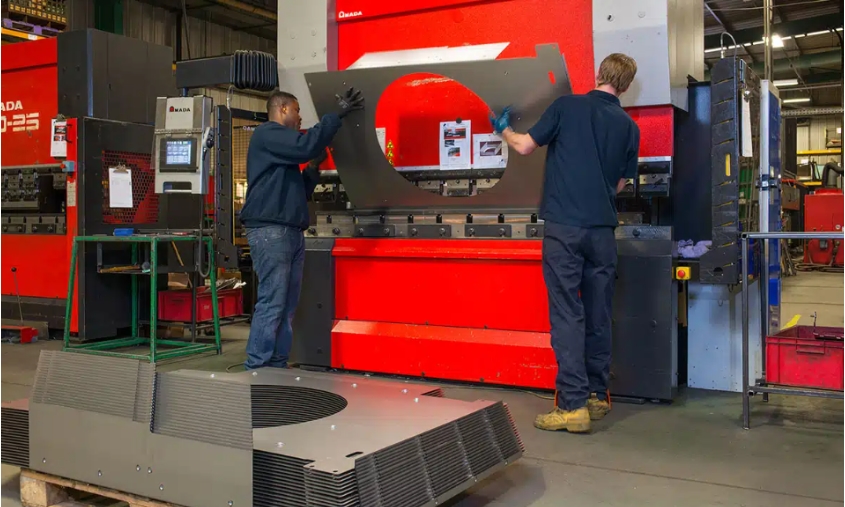
Most manufacturing facilities rely on components that never get much attention. Stainless steel pressings fall into this category, yet they’re behind some of the most critical operations in modern industry. These formed metal parts show up in medical devices, automotive assemblies, and food processing equipment. The pressing process takes flat steel and transforms it into precise shapes, but that’s just the starting point of what makes them valuable.
Strength Through Formation
Something interesting happens when steel goes through the pressing process. The metal doesn’t just change shape. Its internal structure actually becomes stronger. Work hardening occurs as the material deforms, and the crystalline structure gets denser. Engineers know this and design components accordingly. They place bends and ribs where extra strength matters most. A flat piece of steel and a pressed component made from the same material don’t perform equally. The formed part wins every time.
The Self-Healing Surface
Scratches and abrasions happen in industrial environments. Most materials need protective coatings that eventually wear down and fail. Stainless steel pressings work differently because of their chromium content. When the surface gets damaged, chromium reacts with oxygen immediately. A new protective layer forms on its own. This happens continuously without any intervention. Components in harsh environments maintain their integrity because this regeneration never stops. It’s built into the material itself rather than applied afterwards.
Beyond Standard Shapes
Early pressing technology could only handle basic geometric forms. Modern techniques have changed what’s possible. Progressive dies now create parts with compound curves and varying thicknesses in a single operation. Deep drawing produces seamless cylindrical components that look impossible to make from flat steel. Some manufacturers use hydroforming, where fluid pressure shapes metal into complex forms. These advances mean fewer welds and joints. Assembly becomes simpler. Structural weak points disappear because components arrive as single integrated pieces.
The Hidden Economics
Initial tooling costs make some manufacturers hesitate. The calculation changes when production volume enters the picture. A well-designed progressive die stamps parts rapidly with consistent precision. There’s minimal material waste because nesting software arranges components efficiently on steel sheets. No secondary finishing is needed for most applications. The metal arrives ready to use. These factors accumulate quickly, and the economic advantage becomes clear sooner than many expect. Alternative manufacturing methods simply can’t match the efficiency at volume.
Sterility by Nature
Contamination control drives decision-making in pharmaceuticals and food production. Surface texture matters enormously in these environments. Pressed stainless steel components offer something unique. The surface contains no microscopic pores where bacteria can hide and multiply. There are no coating layers that eventually crack or peel away. Cleaning protocols work more effectively because the material itself resists colonisation. Validation studies consistently demonstrate this advantage. Meeting regulatory requirements becomes straightforward rather than a constant challenge.
Thermal Performance Reality
Temperature extremes reveal a material’s true capabilities. Some metals become brittle in cold conditions. Others lose strength when heated. Stainless steel maintains its properties across a remarkable temperature range. Cryogenic applications rely on certain grades that stay ductile when other materials would shatter. High-temperature environments benefit from oxidation resistance that prevents scale formation. The low thermal expansion coefficient matters too. Components maintain precise clearances and fits regardless of temperature swings, which proves critical in assemblies where tolerance stack-up determines success or failure.
Surface Sophistication
The finish on stainless steel pressings serves functional purposes beyond appearance. Electropolishing removes surface material to create an ultra-smooth texture that resists contamination. Passivation enhances the protective chromium oxide layer chemically. Bead blasting produces consistent matte surfaces that hide fingerprints and minor scratches effectively. These treatments get selected based on how components will perform in their specific environment. A medical device needs different surface characteristics than an architectural element, and the finishing process delivers those exact properties.
Circular Material Economy
Recycling claims often sound better than reality. Stainless steel actually delivers on the promise. The material goes back into furnaces and emerges with properties identical to virgin steel. This cycle repeats indefinitely without degradation. Manufacturing scrap never becomes waste. Components at the end of their service life return to the supply chain as raw material. An automotive part might become medical equipment in its next life, then architectural hardware after that. The material maintains its value perpetually while eliminating disposal concerns entirely.
Conclusion
The capabilities of stainless steel pressings go well beyond basic metalworking. Work hardening creates stronger components during the forming process itself. Self-regenerating corrosion protection operates continuously without maintenance. Advanced forming techniques produce complex geometries as single integrated pieces. Performance in sterile environments, temperature extremes, and demanding applications comes from the material’s fundamental properties. Production efficiency and genuine recyclability add practical advantages that matter in real manufacturing environments. These pressings solve engineering challenges across industries because they deliver reliable performance that lasts.
