
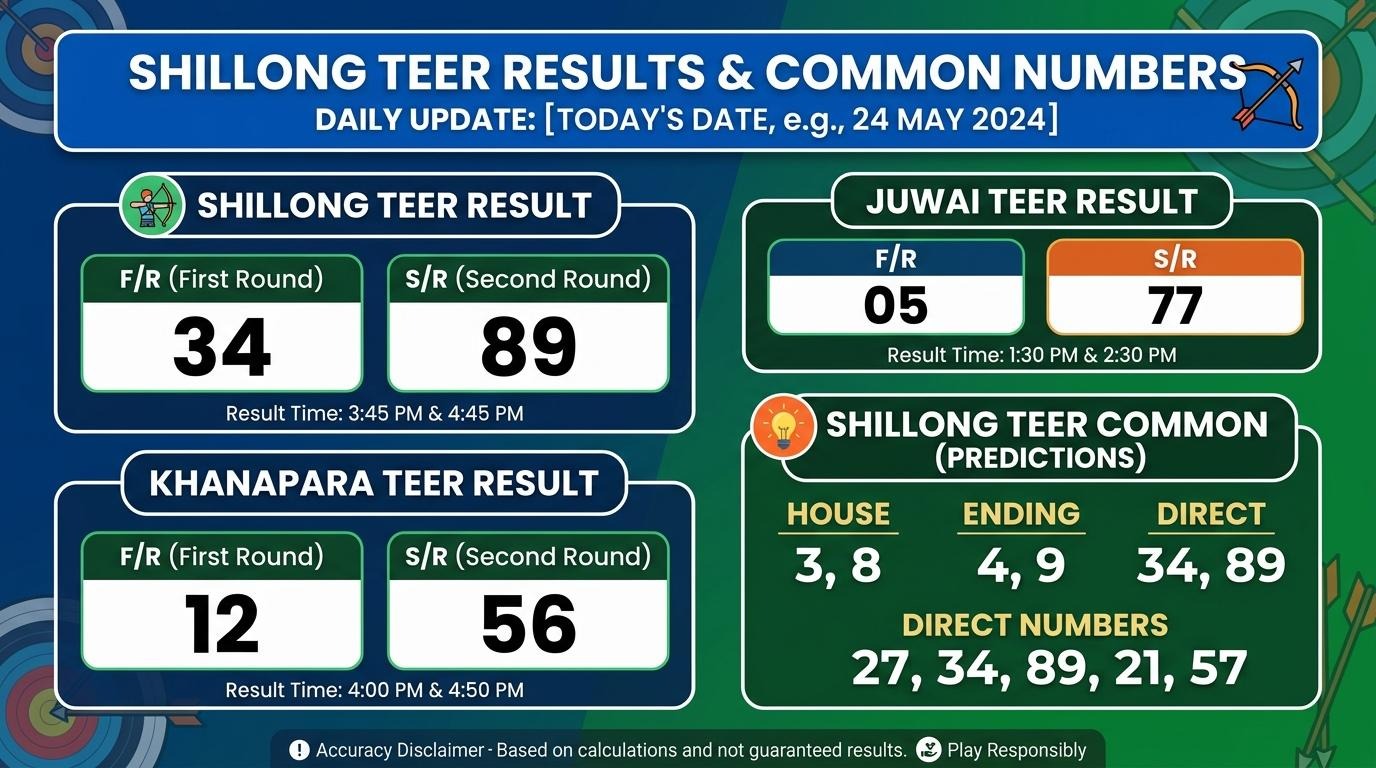
The mystical mist of the Khasi Hills sets the stage for one of Northeast India’s most intriguing traditions: Shillong Teer. Deeply embedded in the daily life of Meghalaya, this unique game seamlessly blends the ancient sport of traditional archery with the modern thrill of number-based forecasting. Organized under the supervision of the Khasi Hills Archery Sports Association (KHASA) at the iconic Polo Ground in Shillong, the game draws thousands of enthusiasts every single day except Sundays.
Whether you are a local participant who carefully records numbers daily or a curious traveler seeking to understand this unique phenomenon, keeping track of the official shillong teer result is key to following the action across both daily rounds.
What is Shillong Teer?
Traditionally known among local Khasi communities as Thoh Tim, Teer translates directly to “arrow” in Hindi. Unlike standard lotteries that rely on electronic random number generators, Shillong Teer is entirely driven by human physical skill and traditional archery precision.
The game was formally legalized under the Meghalaya Amusement and Betting Tax Act of 1982, establishing a regulated environment that generates state revenue while preserving indigenous sports. Today, twelve distinct archery clubs affiliated with KHASA participate in the event, fielding skilled archers who shoot handcrafted bamboo arrows at traditional targets.
How the Game is Played: Round 1 & Round 2
The gameplay follows a strict, time-tested format divided into two distinct afternoon sessions:
- First Round (F/R): Commencing at approximately 3:45 PM IST, 50 archers step up to the shooting line. Within a strict 5-minute time window, each archer releases 30 cane-tree arrows toward a cylindrical target set at a designated distance.
- Second Round (S/R): Declared at approximately 4:45 PM IST, the second session involves 30 archers. Each archer shoots 20 arrows into the target within the same timeframe.
Calculating the Winning Number
The mechanics behind determining the winning digits are simple yet ingenious:
- Once an archery round ends, officials pull all successfully hitting arrows from the target and count them publicly.
- The winning number consists of the last two digits of the total count of arrows embedded in the target.
- Example: If archers hit the target with a combined total of 1,247 arrows in the first round, the winning single/double-digit number for Round 1 is 47.
Payout Structure & Betting Options
Participants can purchase tickets ranging from modest values of ₹1 up to ₹100, selecting any number from 00 to 99 for either or both rounds. The payout structure offers attractive returns relative to the wager:
| Round / Bet Type | Wager Example | Potential Return Ratio | Win Amount for ₹1 Bet |
|---|---|---|---|
| First Round (F/R) | Predict 1st Round 2-digit number | 80 to 1 | ₹80 |
| Second Round (S/R) | Predict 2nd Round 2-digit number | 60 to 1 | ₹60 |
| Forecast (FC / Combined) | Predict both F/R and S/R numbers | 4000 to 1 | ₹4,000 |
Note: Returns may vary slightly based on local licensing and official betting counter regulations.
Dream Interpretation and Common Numbers
What elevates Shillong Teer from a standard game of chance into a cultural mainstay is its deep connection to indigenous folklore and dream symbolism. Local enthusiasts frequently analyze their nighttime dreams before choosing their daily numbers:
- Dreams of Water / Rain: Often associated with numbers like 07 or 88.
- Dreams of Animals or Birds: Linked to specific digit sets based on regional charts.
- Dreams of Disputes or Meetings: Frequently mapped to double digits like 37.
In addition to dream mapping, experienced followers maintain detailed historical charts to track “House” (the tens digit) and “Ending” (the units digit) trends over months, attempting to calculate probable “Target Numbers” or “Common Numbers” for upcoming draws.
Related Regional Teer Games
The immense popularity of Shillong Teer has inspired similar legal archery draws across the region, creating a broader ecosystem of daily updates:
- Khanapara Teer: Conducted near the Assam-Meghalaya border, adhering to similar rules and timetables.
- Juwai Teer: Played in the Jaintia Hills region, offering separate morning and afternoon results.
- Shillong Night Teer: Designed for evening audiences looking to follow late-session results.
Conclusion
Shillong Teer is far more than a simple daily draw—it is a living tradition that showcases the extraordinary craftsmanship of local archers while bringing community members together. By combining physical athletic discipline, local folklore, and numerical analysis, it remains one of the most vibrant cultural experiences in Northeast India.
To better appreciate the unique atmosphere surrounding the archery grounds in Meghalaya, check out Meghalaya’s Teer Archery Tradition. This video provides insightful coverage of how local belief, tradition, and archery come together in Shillong.