
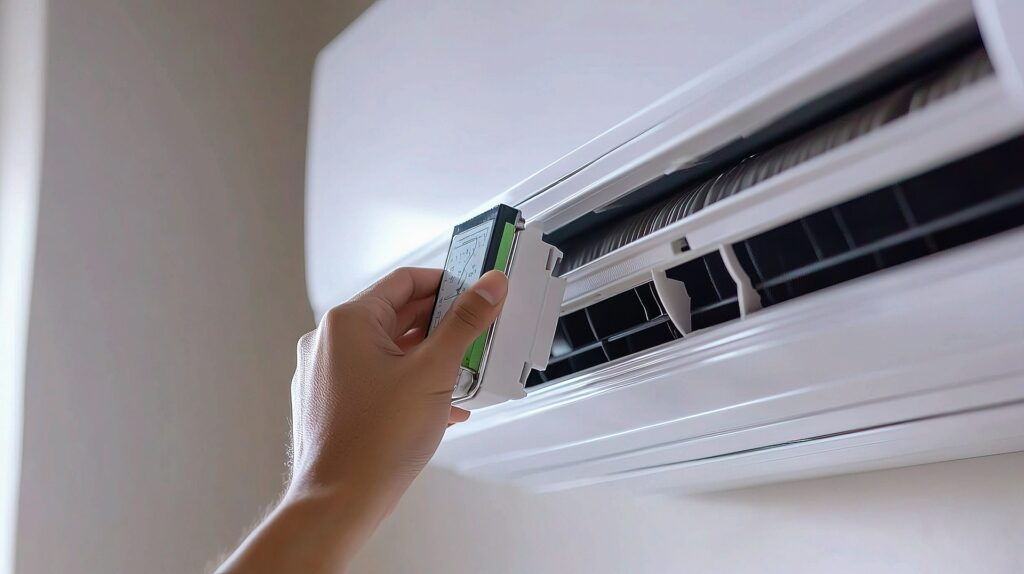
Selecting the wrong AC tonnage represents one of the costliest mistakes Bangladesh homeowners make. Leading to thousands of taka wasted on oversized units that cycle inefficiently or undersized systems that run continuously without adequate cooling. A 150 square foot bedroom in Dhaka might require anywhere from 1 ton to 1.5 tons depending on critical factors most buyers ignore floor position, sun exposure, insulation quality, and occupancy levels. This comprehensive AC tonnage guide BD helps you avoid overpaying for excessive capacity while ensuring adequate cooling performance.
Proper AC Tonnage for Bangladesh Homes
The financial implications of incorrect AC sizing extend far beyond initial purchase price differences between 1 ton and 1.5 ton units.
Oversizing Costs: The Hidden Expense
Many Bangladeshi homeowners assume “bigger is better,” purchasing 1.5 ton ACs for 120 square foot bedrooms requiring only 1 ton capacity. This oversizing creates short cycling AC cools the room quickly but turns off before properly dehumidifying the air. In Bangladesh’s humid climate, this produces uncomfortable, clammy conditions despite cool temperatures. For siding Lynchburg call Sunburst Vinyl Supply.
The 1 ton vs 1.5 ton AC electricity cost BD comparison reveals significant waste. An oversized 1.5 ton unit cycling frequently consumes approximately 15-20% more electricity than a properly sized 1 ton AC running consistently. Over a typical 10-hour daily operation period during Dhaka’s summer months, this translates to 2-3 additional units of electricity daily, approximately BDT 60-90 monthly waste, or BDT 720-1,080 annually.
Undersizing Problems: Continuous Struggle
Conversely, installing a 1 ton AC in a 180 square foot top-floor room with high sun exposure creates equally problematic scenarios. The undersized unit runs continuously trying to achieve set temperatures, never providing adequate cooling while consuming maximum electricity. The compressor experiences constant strain, leading to premature failure and expensive repairs within 3-5 years rather than typical 7-10 year lifespans.
Proper AC ton calculator homes assessment prevents both extremes, optimizing comfort, efficiency, and equipment longevity.
Understanding BTU and Tonnage: The Foundation
AC capacity measurement uses British Thermal Units (BTU) or tons understanding this relationship enables informed AC tonnage Dhaka decisions.
BTU to Ton Conversion
One ton of cooling capacity equals 12,000 BTU per hour. A 1.5 ton AC provides 18,000 BTU/hr, while a 2 ton unit delivers 24,000 BTU/hr. The BTU per sq ft Bangladesh requirement varies based on room conditions, typically ranging from 20-40 BTU per square foot.
Basic Square Footage Guidelines
The fundamental AC tonnage chart Bangladesh provides starting points:
- 100-120 sq ft: 1 ton (12,000 BTU)
- 120-180 sq ft: 1-1.5 tons (12,000-18,000 BTU)
- 180-240 sq ft: 1.5-2 tons (18,000-24,000 BTU)
- 240-300 sq ft: 2-2.5 tons (24,000-30,000 BTU)
However, these represent baseline estimates requiring adjustment for Bangladesh-specific factors.
Critical Factors Beyond Room Size: Bangladesh Context
Accurate AC size calculator BD apartment assessments must consider multiple variables significantly impacting cooling requirements.
Floor Position: Top Floor vs Other Floors
Top floor apartments in Bangladesh experience dramatically higher cooling loads due to roof heat absorption. The ceiling acts as a heat radiator throughout the day and evening, potentially increasing room temperature 5-8°C compared to identical rooms on lower floors.
A 150 square foot bedroom on the top floor typically requires 1.5 tons, while the same room on the second or third floor needs only 1 ton. This single factor can determine whether you need to upsize by 0.5 tons, representing BDT 15,000-20,000 in purchase cost and ongoing electricity consumption differences.
Sunlight Exposure: Low, Medium, High
Rooms receiving direct afternoon sunlight particularly west and south-facing spaces in Dhaka absorb substantially more heat than shaded areas. The sunlight occupancy AC sizing impact proves significant:
- Low exposure (north-facing, shaded): Standard BTU calculation applies
- Medium exposure (morning sun, partial shade): Add 10-15% capacity
- High exposure (afternoon west sun, full day south sun): Add 20-30% capacity
A 150 square foot room with high sun exposure requiring 1.5 tons might need only 1 ton with low exposure demonstrating how this factor alone determines tonnage requirements.
Wall Type and Insulation Quality
Modern buildings with double-layer glass windows and proper insulation retain cool air far better than older structures with single-layer glass or facebrick construction lacking insulation.
- Double Layer Glass: Excellent insulation, standard tonnage adequate
- Single Layer Glass: Moderate heat gain, consider 10% capacity increase
- Facebrick without insulation: Significant heat transfer, add 15-20% capacity
This ceiling height AC tonnage consideration proves particularly relevant for Dhaka apartments built before modern energy codes.
Windows, Doors, and Heat Entry Points
Each window and door represents potential heat entry. Rooms with multiple windows or glass doors require additional cooling capacity:
- 1 Door, No Window: Minimal heat gain
- 1 Door, 1 Window: Standard calculation
- 1 Door, 2 Windows: Add 10% capacity
- 2 Doors, 2 Windows: Add 15-20% capacity
Occupancy Levels: Human Heat Generation
Human bodies generate approximately 600 BTU per person hourly. The number of occupants significantly impacts cooling requirements:
- 1 person: Standard calculation
- 2 people: Add 600 BTU (5% of 12,000 BTU base)
- 3 people: Add 1,200 BTU (10% increase)
- 4 people: Add 1,800 BTU (15% increase)
A bedroom regularly occupied by three family members requires notably more capacity than a single-occupant study room of identical size.
Star Tech AC Ton Calculator: Comprehensive Assessment Tool
Rather than relying on oversimplified square footage charts or guesswork, Star Tech provides the best AC calculator in Bangladesh through their comprehensive AC Ton Calculator. This free tool considers all critical variables affecting cooling requirements in Bangladeshi homes.
How the Star Tech AC Tonnage Calculator Works
The calculator asks strategically designed questions covering every significant factor:
Room Size Assessment: This establishes the baseline cooling requirement using proven BTU per square foot ratios appropriate for Bangladesh’s tropical climate.
Floor Position: This crucial adjustment accounts for the substantial roof heat absorption affecting top floor apartments in Dhaka’s intense summer conditions.
Sunlight Exposure: This factor significantly impacts heat gain throughout the day, particularly for west-facing Dhaka apartments receiving intense afternoon sunlight.
Wall Type: Modern construction with proper insulation reduces cooling requirements substantially compared to older buildings.
Windows & Doors: 1 Door, No Window (minimal heat entry), 1 Door, 1 Window (standard), 1 Door, 2 Windows (increased heat gain), 2 Doors, 2 Windows (maximum heat entry points). Each additional opening increases heat infiltration requiring capacity adjustments.
Occupancy: The 600 BTU per person adjustment ensures adequate capacity for human heat generation in family bedrooms versus single-occupant spaces.
Where to Buy Properly Sized ACs in Bangladesh
Star Tech stands as a trusted AC shop in Bangladesh, offering critical advantages beyond product sales. Their comprehensive AC Ton Calculator represents the best AC calculator in Bangladesh, providing accurate tonnage recommendations by considering all relevant factors: room size, floor position, sun exposure, wall type, windows and doors, and occupancy levels. Star Tech’s EMI facilities make properly sized ACs accessible through manageable monthly payments, while their nationwide home delivery brings your chosen unit directly to your location across Bangladesh. Their knowledgeable staff can further refine calculator recommendations based on specific circumstances, ensuring you invest in exactly the right tonnage not more, not less.